
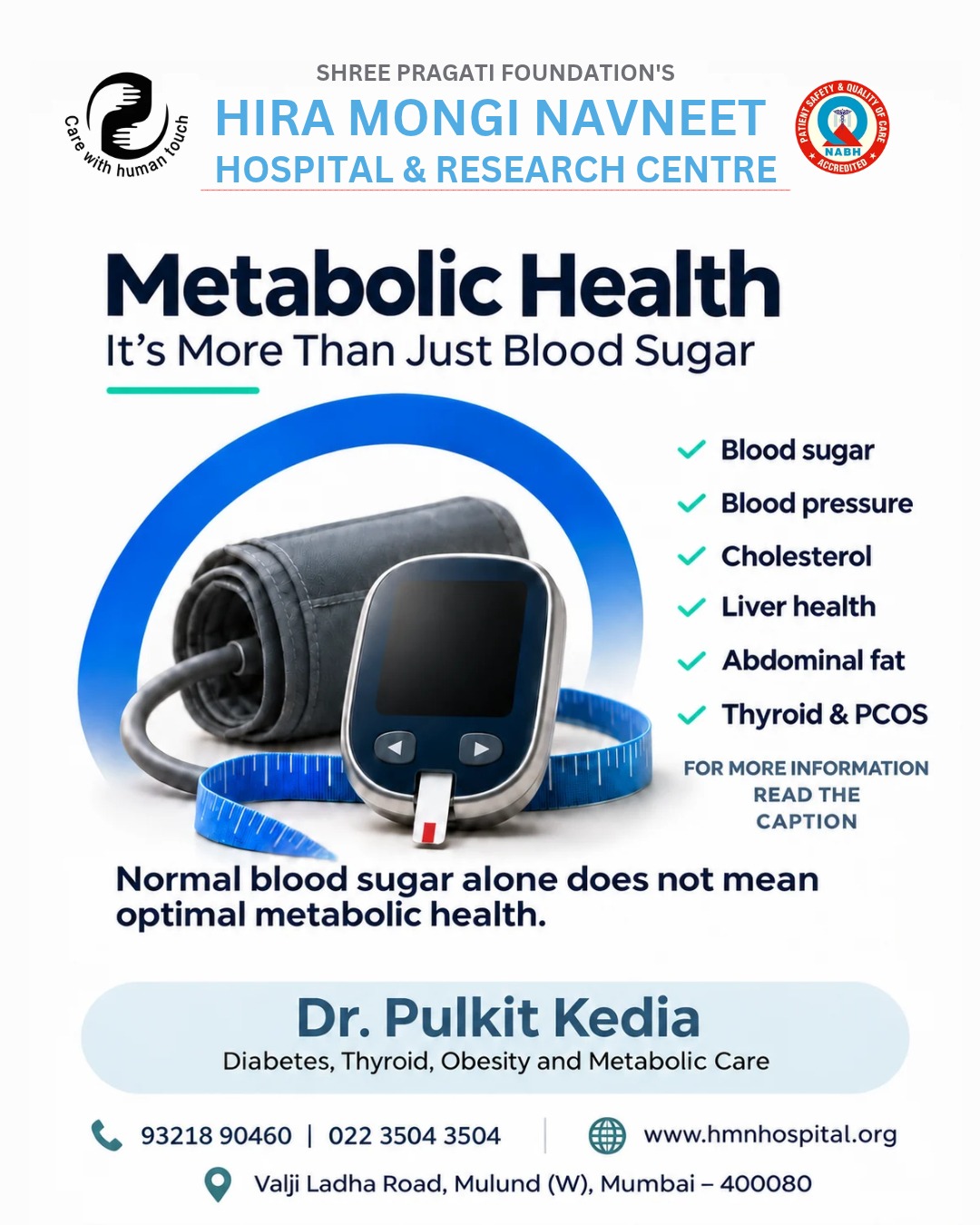
Metabolic Health: It’s More Than Just Blood Sugar
When was the last time you checked your blood sugar? What about your blood pressure, cholesterol or liver health? Most people associate metabolic health with diabetes. However, it involves much more than blood sugar alone.
Metabolic health reflects how well your body regulates blood sugar, processes fats, maintains blood pressure and manages energy. These functions are interconnected, and an imbalance in one area can increase the risk of problems in others.
What conditions are linked to metabolic health?
1. Diabetes and Prediabetes
Blood sugar levels can remain elevated for years without obvious symptoms. Prediabetes is an early warning sign that deserves attention, as timely lifestyle changes can help prevent or delay the onset of type 2 diabetes.
2. Obesity and Excess Abdominal Fat
Excess body fat, particularly around the abdomen, is associated with insulin resistance and a higher risk of diabetes, heart disease and fatty liver. Even modest, sustained weight loss can improve metabolic health.
3. High Blood Pressure and Cholesterol
High blood pressure and abnormal cholesterol often have no noticeable symptoms. Together with elevated blood sugar and excess abdominal fat, they increase cardiovascular risk.
4. Fatty Liver
Fat accumulation in the liver is frequently associated with obesity, insulin resistance and type 2 diabetes. It can sometimes progress to liver inflammation, scarring and advanced liver disease. Early assessment is important.
5. Thyroid Disorders and PCOS
Thyroid disorders can affect energy levels, weight and several bodily functions. Polycystic Ovary Syndrome (PCOS) is a hormonal condition that is frequently associated with insulin resistance and metabolic risk.
How can you improve your metabolic health?
You do not need extreme diets or complicated routines. Start with sustainable changes:
– Eat better: Include vegetables, whole grains, pulses, adequate protein and fibre in your daily diet. Limit sugary drinks and highly processed foods.
– Move regularly: Aim for at least 150 minutes of moderate-intensity physical activity every week, along with strength-training exercises at least twice weekly.
– Maintain a healthy weight: Even a modest reduction in excess body weight can improve blood sugar, blood pressure and liver health.
– Sleep well: Maintain a regular sleep schedule and aim for 7–9 hours of sleep.
– Get assessed: Monitor blood sugar, blood pressure, cholesterol and other relevant health parameters based on your individual risk factors.
The Takeaway
You do not have to wait until you develop diabetes or another health condition to start taking care of your metabolic health.
A normal blood sugar reading alone does not necessarily mean that your overall metabolic health is optimal.
Look beyond sugar. Look after your metabolic health.
Early identification, evidence-based medical care and consistent lifestyle changes can help protect your health in the long run.
Dr. Pulkit Kedia
Diabetes, Thyroid, Obesity and Metabolic Care
For consultations and appointments with Dr. Pulkit Kedia, contact:
🏥 SPF’s Hira Mongi Navneet Hospital & Research Centre
📍 Valji Ladha Road, Mulund (W), Mumbai – 400080
📞 93218 90460 | 022 3504 3504
🌐 www.hmnhospital.org

Add comment